

Every week with our newborn and toddler changes as we all attempt to settle into a routine together. There still isn’t one by the way, in case you were wondering. We’re all floating around in our own chaos attempting to make it through the day and handle big feelings! There’s a semblance of a routine, but I know it’s going to keep adapting as our newborns needs change and as I heal. I’m still recovering from my c-section which adds an extra layer of difficulty to it all since I’m limited with how I can move, what I can carry, and how often I can get up.
I earn a small commission from qualifying purchases from any links posted.
Handling new sibling jealousy and regression
By week 3, we started to get into a bit more of a routine. My mom was visiting before and now that she left, it was just me, my husband, and the 2 kids. My toddler, D, definitely started to become more fussy and have more tantrums since he wasn’t getting as much attention with my mom gone.
D also started to have even more regression with his potty training and that was his main form of “taking control.” Since he’s going through a big change right now, it’s normal for toddlers to look for some kind of avenue in which they can control: eating, sleeping, and potty training. His avenue was the potty. D would have an accident every time and then tell me after it was wet with a sly smirk on his face. Eventually, we solved this issue by having a small potty on the first floor that we would usually keep when he’s playing with my husband in the basement. This way, he started to use it on his own and stopped almost all accidents. When he was using the larger toilet, he had to ask us for help to get up and down and there was a power struggle there. This is the potty seat I have that’s my favorite for boys because it has a tall splash guard, a nice back rest, and it’s tall since my son is on the larger side.

Now, the main issue that we struggle with is jealously, especially when I’m breastfeeding my newborn. My toddler takes this time as an opportunity to get into everything he shouldn’t for attention. I’ve tried engaging with him while he plays and reading to him while I breastfeed, but it isn’t enough for him since my attention is still split, and he gets into trouble. My plan is to introduce some special toys, particularly battery operated ones that he can play with independently since we don’t typically use those, or a bin of different toys that I rotate like trains, during breastfeeding time so he has something to entertain himself with. This will hopefully also make it a special time for him to look forward to instead of a time of jealousy where mom is holding and feeding his baby brother and not giving him the attention.
Using pacifiers and bottles while breastfeeding
Since I’m exclusively breastfeeding, I didn’t introduce a pacifier or a bottle until week 4 to avoid nipple confusion. If introduced before this stage, babies can start to have trouble latching onto the breast because they become used to sucking on a pacifier or bottle. They’ll start to try to suck on the breast in the same way, which doesn’t work out well because the breast isn’t the same shape as a pacifier or bottle. After more practice at the breast, they’ll become little booby pros and they won’t get them confused. My son has a pretty good latch but he can still struggle sometimes so I didn’t want to have any issues introducing a bottle too soon.
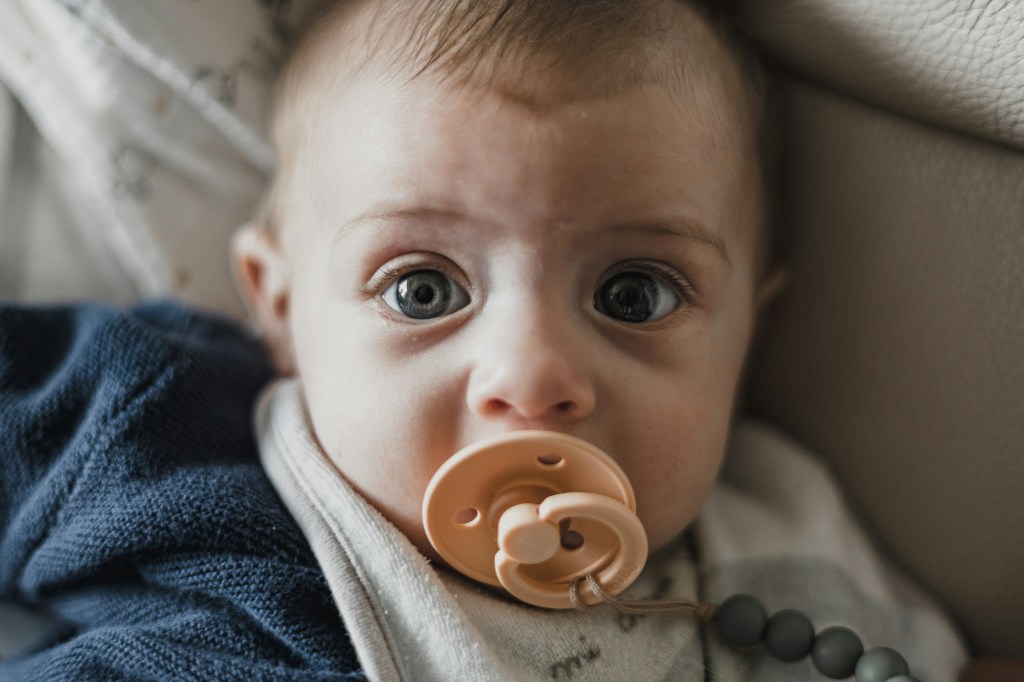
💡Tip: If exclusively breastfeeding, wait until week 3 or 4 to introduce a pacifier and bottle to avoid nipple confusion.
We use the pacifier just to help him fall asleep, which we also did not introduce until week 4. I don’t want to use a pacifier during other times of the day because I don’t want to form a habit of him using it whenever. Also, when he’s awake, if he’s crying and it’s not because he’s sleepy, it’s because he has other needs that have to be met like a dirty diaper or needing milk. If he’s constantly sucking on a pacifier or I shove one in his mouth without assessing the situation every time, he can’t express his needs.
My first son didn’t take a pacifier, but for whatever reason I didn’t think to try different ones! I did my research on them and chose one that claimed to be the most similar to a breast and bought a ton of them. When he didn’t like them, I just assumed he didn’t like pacifiers and stopped trying. This was a shame too because I had a ton of pacifiers I wasn’t able to use. With my second son, I got a pacifier sample box with different styles of pacifiers and tried different ones until we found one that he liked! This made such a huge difference because we were able to try a bunch at once and when we found the one he liked, I bought more of them. My son likes this one from MAM and this one from Bibs.
💡Tip: If your baby doesn’t take a pacifier, make sure you try different shapes and materials.
Why introduce a bottle if you’re breastfeeding
Don’t wait until too long after 4 weeks to introduce a bottle, even if you’re planning on exclusively breastfeeding, because there will be times where someone else needs to feed your baby because you have to do something and if your baby wasn’t introduced to a bottle by this point, they will struggle with using one. This is what happened with my first son and it was really difficult for me to do things outside of the house because he had trouble drinking from a bottle! He got the hang of it eventually but it took a lot of trial and error to get him to use one instead of introducing one from the get go.
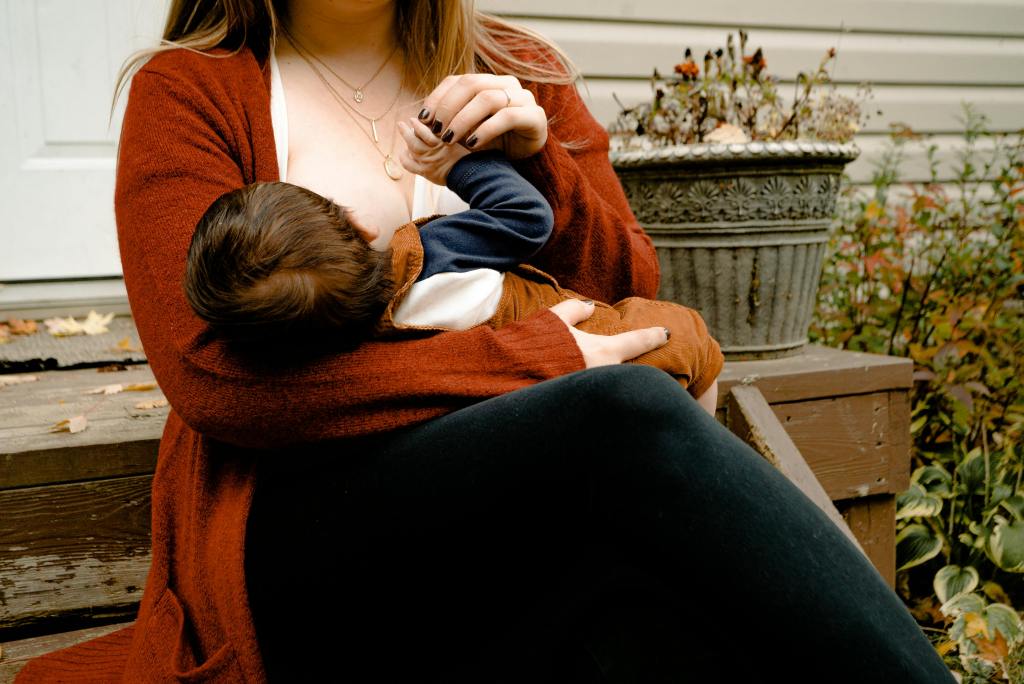
Having the option to bottle feed your baby is honestly a big help when it comes to mental health. When my son wouldn’t drink from a bottle, I felt shackled to the house and to him. I love him, but the fact that I was his only food source and I literally could not step outside the house without him for more than a short period of time really started to take a toll on me. I had to constantly look at the clock to make sure I wasn’t out for too long so I wouldn’t miss his next feeding. On top of that, I’d never be able to go to appointments without taking him with me even if my husband was home because I was the only one who could feed him! Don’t make the same mistake I did in thinking that introducing a bottle early wasn’t a big deal because I was going to exclusively breastfeed. Even if you don’t do it often, it’ll be helpful down the road!
💡Tip: Make sure to introduce a bottle by 4 weeks, even if you’re planning to exclusively breastfeed, for when you’re not around!
Tips on introducing a bottle to a breastfed baby
There’s a lot of nuances when it comes to how to give baby the bottle, how and when to collect milk for them, and when to give them the bottle. I let myself get overwhelmed by the options and worried about my milk supply getting affected, and this is what stopped me from using the bottle with my first son. Here’s what I did the second time around that made it very low stress and improved my mental health by giving me some freedom.
Ways to collect breastmilk for the bottle
Remember that if you don’t want to give formula, you can always pump for bottle introductions. It doesn’t have to be a lot, just one ounce so that way they can have some practice using the bottle, and then you can do a regular nursing session! You can also use a Haakaa on one breast while you’re feeding your baby on the other breast and use this to collect milk for the bottle. You can use a couple sessions of the Hakaa (2 sessions can give you 2 ounces total or more) and that should be enough for a single bottle at this age.
If you did want to pump to give an entire bottle, you could do this after the breastfeeding session or in between sessions for 15 minutes. You just don’t want it to be too close to your next session. Your supply is highest in the morning so that could be a good time but you could do it at any time of the day. Make sure not to pump before your milk has regulated at 4 weeks or later or this can make your body produce an oversupply which can lead to engorgement. You also don’t want to randomly do a ton of pumping sessions because this can have the same effect.
My goal was to pump milk for him for the bottle, but on top of not wanting to pump and being exhausted from the day, I don’t even know when I’d have time to pump without taking away from my precious little free time in the evenings and afternoons. Because of this, we decided to use formula to give him small amounts in a bottle in addition to a breastfeeding session and to use if I’m not at the house and my husband is watching him and needs to feed him.
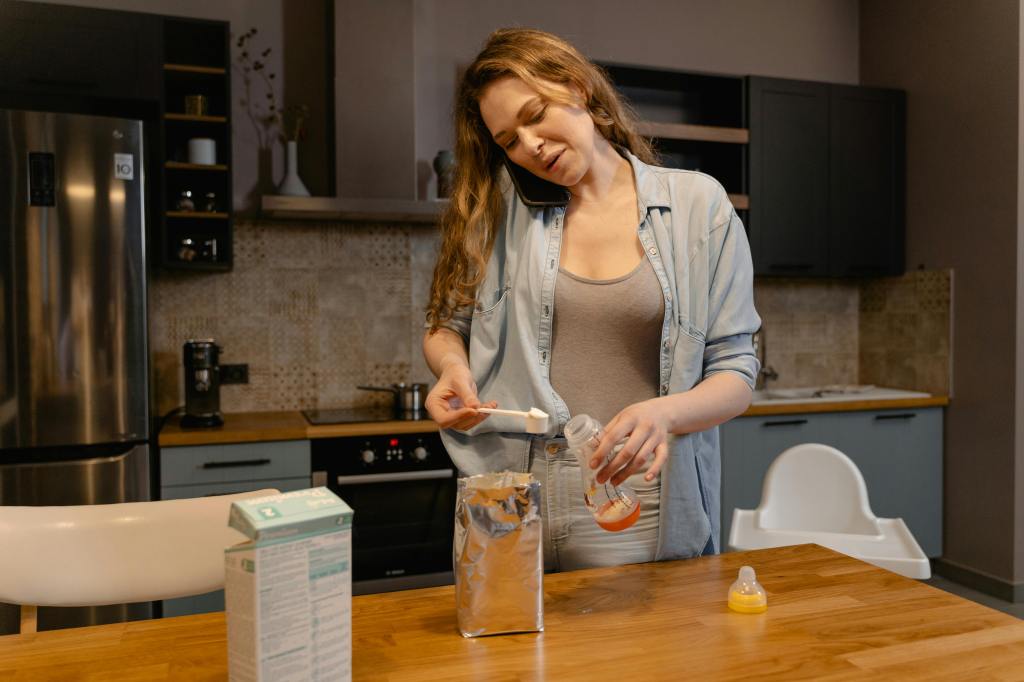
Something to take into consideration if you’re rarely going to be using formula, which I don’t realize since I’ve always exclusively breastfed with my first son, is that you’re supposed to use a can of formula within a month of opening it. I didn’t know this and bought a giant can and there’s no way we’re going to use it within that time frame! Once it expires, I’m going to switch over to smaller containers of ready to go formula that’s liquid and already mixed. This way, the whole container doesn’t go to waste.
💡Tip: Once opened, formula cans must be used within one month! Buy smaller alternatives if using occasionally.
When to give baby the bottle
I know I had a ton of questions about when to give my baby the bottle since it is being accompanied by breastfeeding, especially because I try to avoid pumping since I don’t like to: How often should you give the baby a bottle so they can be used to it? What time of the day should I give it to them? Should I accompany it with or without a breastfeeding session? How far apart should I do it with a breastfeeding session? Do I have to pump after?
Here is how I give my baby a bottle when I usually breastfeed! We give him a bottle once a week so he is familiar with the bottle but it doesn’t interrupt my supply of milk. I take my older son, D, to a class that we do together and my husband stays home with the baby. During this time, he gives him formula and since it is only one feeding and only once a week, I don’t pump and I’m totally fine. He drinks a 2 ounce bottle of the premixed formula that we pour into our preferred bottle. This is a really low stress way for me to get out of the house and not have to worry about pumping. As for the time of the day, it can be at any time that works best for you! I’d recommend not doing a full feeding with the bottle right before a long stretch like before night time if you aren’t planning on pumping to replace the session because you can get engorged.
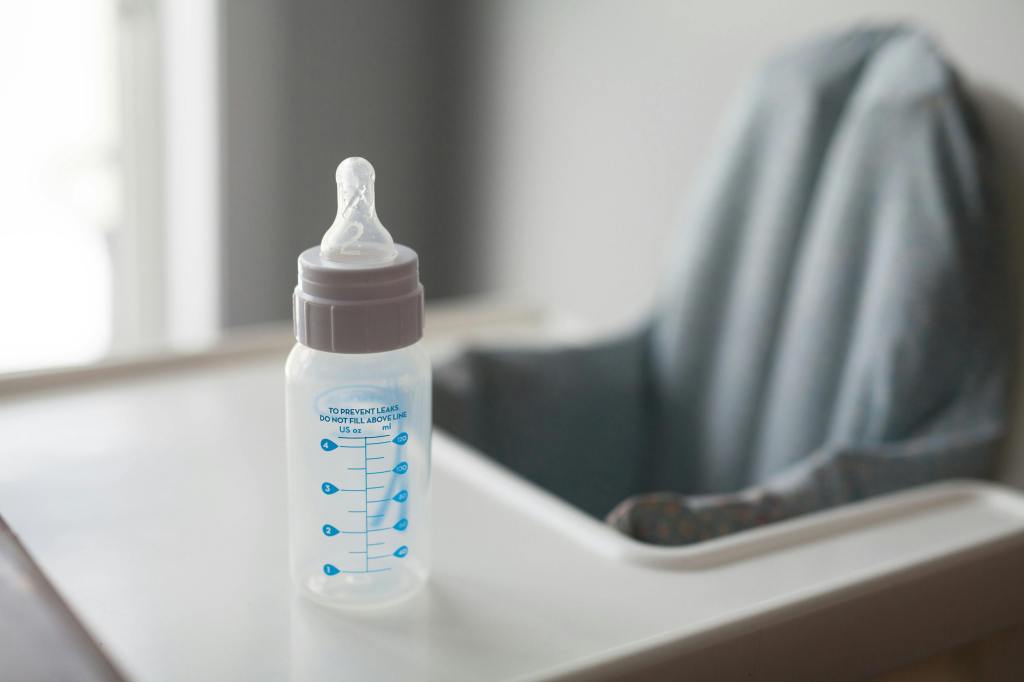
You can also decide to give the baby one ounce of formula from the bottle and then do a breastfeeding session after if you don’t want to skip a feeding altogether or if the only time you’re able to do a bottle is right before the evening and you don’t want to pump but you want them to have that practice.
How to give baby the bottle
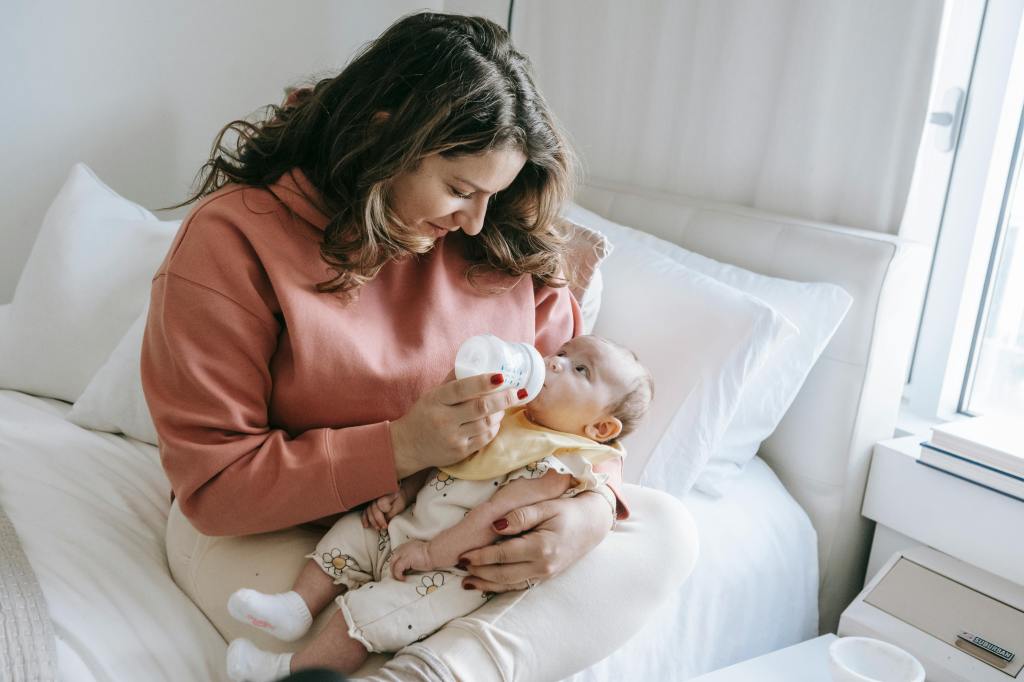
When actually feeding your baby from a bottle, it could be helpful to have the caregiver that isn’t breastfeeding give the baby the bottle. Your baby is less likely to refuse the bottle this way, fussy little things! It’s also helpful to have them more upright rather than laying back (one position is to have the baby’s back towards you, but you can also have them in the crook of your arm slightly angled back) and have the bottle at a horizontal angle to allow for the baby to pull the milk in rather than than angling it for them to chug it. Letting the baby pace themselves is more similar to breastfeeding since it is slower.
Also make sure you give breaks to burp your baby and don’t try and pressure your baby to drink more when they are not wanting to. They know when they are full and have had enough! Forcing them to drink more when they don’t want it has correlations to obesity in later childhood because they don’t learn to control their hunger cues. If you want more tips or need help troubleshooting bottle feeding your baby, let me know in the comments!
As a side note, if your baby isn’t drinking well from one bottle, try a different brand. Our favorite is this one. Bottle nipples have different flows too so as your baby gets older, you have to switch the nipples to different sizes so more milk comes out for them. This was the solution for helping my first son drink from the bottle: we had a size 1 nipple flow and he needed a size 2!
Key takeaways
Every week with a newborn and a toddler at home brings new things to troubleshoot. Because of jealousy, toddlers may sometimes regress, which can be frustrating—but this too shall pass. A common time for their jealousy is during breastfeeding, so giving them a special toy box or activity can help keep them happy. Finally, try introducing a pacifier and a bottle by week 4 to prevent future issues and give yourself a much-needed mental break!





 The Waldessori Mom
Leave a comment