

Circle time is a term that is used in all kinds of elementary schools whether they are Waldorf or not. What makes them different?
What is circle time?
In Waldorf education, there is a dedicated circle time where the children sit down and listen to verses, sing songs, hear a story, and do fingerplay and movements. The topics are related to the natural world and every day responsibilities. Circle time is typically 15-30 minutes long for kindergarteners and even shorter for early childhood. As the seasons change, incorporating verses and fingerplays related to the changing weather can also help tie nature into your child’s day to day– this is my personal favorite thing to do!
An example structure of a circle time could look like this:
- Greeting song: “Good morning, dear earth, good morning, dear sun…”
- Seasonal verse with gestures: A poem about falling leaves with hand movements.
- Movement song: Singing “The Farmer in the Dell” while skipping in a circle.
- Fingerplay: “Five little pumpkins sitting on a gate” with finger gestures.
- Short story: A nature tale about a squirrel preparing for winter.
- Closing verse: A gentle goodbye song to transition to snack time.
I saw how interested my son was in the world around him and I wanted to find ways to celebrate nature and the natural rhythm of the world by including aspects of circle time into our day to day!

Breakdown of Waldorf circle time
I’ve been interested in Waldorf for the longest time, but I’ve always had difficulty finding out more about how to use it at home. The finer details of it remained a mystery to me until I finally decided to take a deep dive into it which was more complicated than I realized it would be! A lot of it is rooted in books that I didn’t necessarily want to spend a bunch of money on at the moment. Eventually, I gathered up enough information to feel comfortable sharing with others! I hope this breakdown makes it easier for you to take home and incorporate it into your day to day as you see fit. I’m inspired by Waldorf rather than doing everything word for word, and you should feel free to do the same.
Waldorf has teachers memorize the fingerplays, verses, and stories. At the moment, I have a 2 1/2 year old and a newborn, so I’m not putting pressure on myself to do that and instead, I read them and try to look down as little as possible. Over time, with repetition, I’ll memorize some of them but I wanted to enjoy the benefits of circle time without putting too much stress on myself! If any part of circle time appeals to you, I urge you to jump into it even if you don’t have every single part memorized or if you can’t do the entire thing with your child because of their age or personality. Most of the time, I do a fingerplay or verse here and there during the day and my son and I both enjoy it!
The main parts of circle time in Waldorf education are openings, verses, fingerplays, stories, and closings. I’m going to break down what each of these things are, provide examples of each, and discuss how I use aspects of these at home with my 2 1/2 year old.
Fingerplays and verses
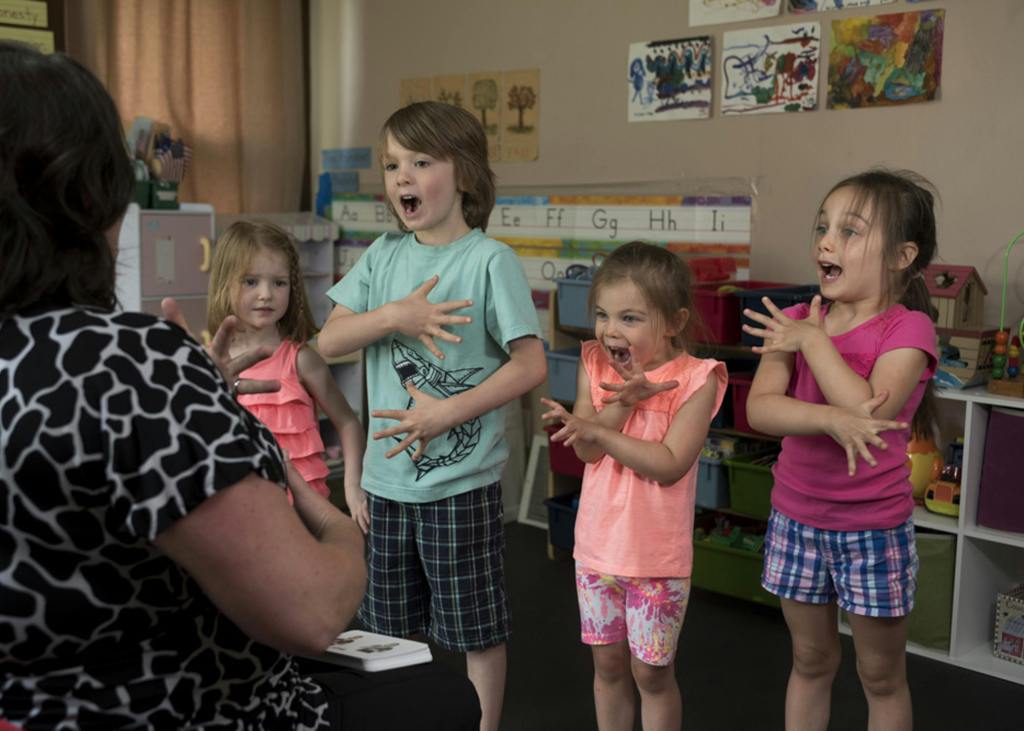
Fingerplays are short rhymes or chants that are paired with fine motor hand movements. Each line or phrase is paired with a specific hand gesture, like wiggling fingers for rain or fluttering hands like a butterfly. They tell a story or depict an action related to animals, nature, or daily tasks. They are used during circle time or during any other part of the day to get children’s attention or to transition between activities. The purpose of fingerplay is to be interactive, engage the imagination, and practice fine motor skills.
Verses are typically used as openings, closings, or songs during circle time or to mark transitions in the daily rhythm like the morning, meal times, and bedtime. They are often longer than fingerplays and don’t have fine motor movements. They can be accompanied by wider, whole body gestures like stretching or swaying arms, but they don’t need to be. When verses are used as openings and closings, it’s typically the teacher reciting them, and when they are used as songs or for movement during circle time, they are accompanied by gestures from the children.
Verses connect children to the daily rhythm by discussing elements of that time of the day, such as the beginning of circle time, or it can connect them to nature by pointing out what they see outside, like leaves falling. They also help with strengthening memory, imagination, and community. My son’s favorite thing to do is spin during verses related to movement, so anything with the words “twirling” and “dancing” are a hit for him! This is really cool to see because it tells me that he’s paying attention to the words within the verse.
Examples of fingerplays
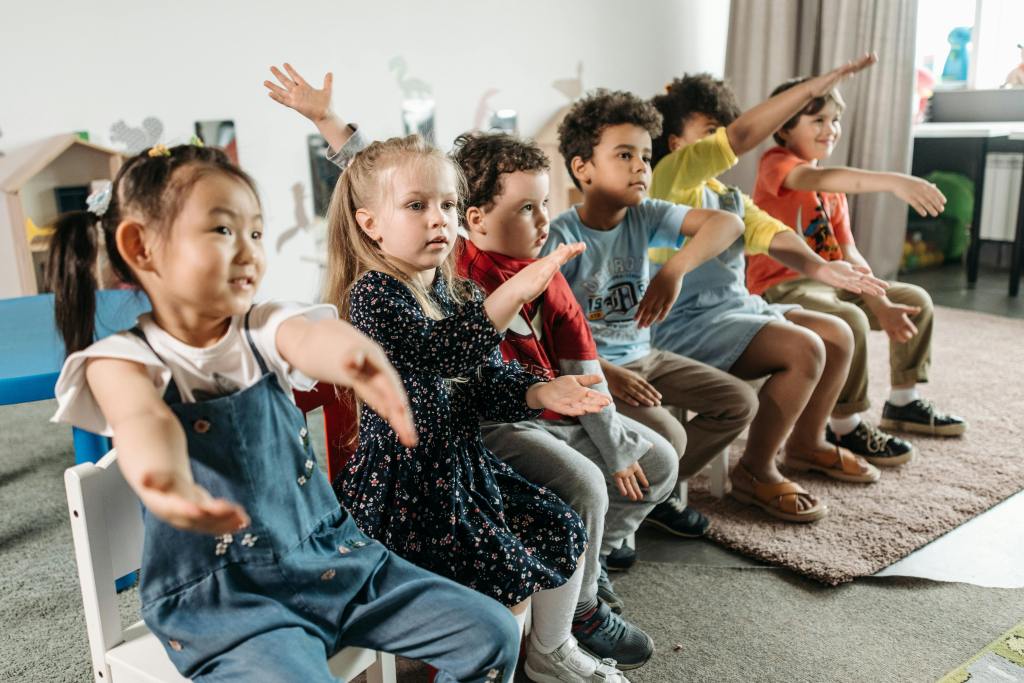
Here are three traditional Waldorf fingerplays, each with specific sayings and corresponding hand movements:
This is the Meadow
This is the meadow where grasses grow (fingers wiggle upward like growing grass)
Here are the daisies, row on row (cup hands to form flowers)
Here comes the rabbit with a hop, hop, hop (fingers hop across the other hand)
And here she nibbles with a nip, nip, nip (fingers pinch lightly)
Off to her home she runs so fast (hands dart behind back)
Safe in her burrow, she’s home at last (hands clasp together)
Five Little Peas
Five little peas in a pea pod pressed (hold up fist with fingers tucked in)
One grew, two grew, so did all the rest (slowly extend fingers one by one)
They grew and grew and did not stop (stretch fingers wide)
Until one day the pod went POP! (clap hands loudly)
Here is the Beehive
Here is the beehive, where are the bees? (hold up fist as the beehive)
Hidden away where nobody sees (cover fist with other hand)
Watch and you’ll see them come out of the hive (slowly open fist)
One, two, three, four, five! (extend fingers one by one, then wiggle them like flying bees)
Examples of verses
Here are three traditional Waldorf verses, typically used without specific finger movements:
Morning Verse
Good morning dear earth
Good morning dear sun
Good morning dear trees
And the flowers everywhere
Good morning dear beasts
And the birds in the trees
Good morning dear you and good morning dear me.
Potential Movements: Arms encircling for the earth or stretching upward for the sun.
Meal Time Verse
Earth we thank you for this food
For rest and home and all things good
For wind and rain and sun above
But most of all for those we love
Blessings on our food
(Usually spoken with hands folded or resting, no specific finger actions.)

Autumn Verse
Yellow the bracken,
Golden the sheaves.
Rosy the apples,
Crimson the leaves.
Mist on the hillside,
Clouds grey and white.
Autumn, good morning!
Summer good night!
Potential Movements: Gentle arm swaying for leaves or mist
Gatherings and closings
Gatherings are used at the beginning of circle time to bring the children into the circle. This would be something like “Good Morning Dear Earth.” This tells them that it’s time to stop doing whatever activity they were doing and come to the circle, which quite literally means for the children to sit or stand in a circle together.
Closings are used at the end of the circle to signal to your children that it is coming to a close and they will move on to a different activity next, such as snack time or outdoor play.
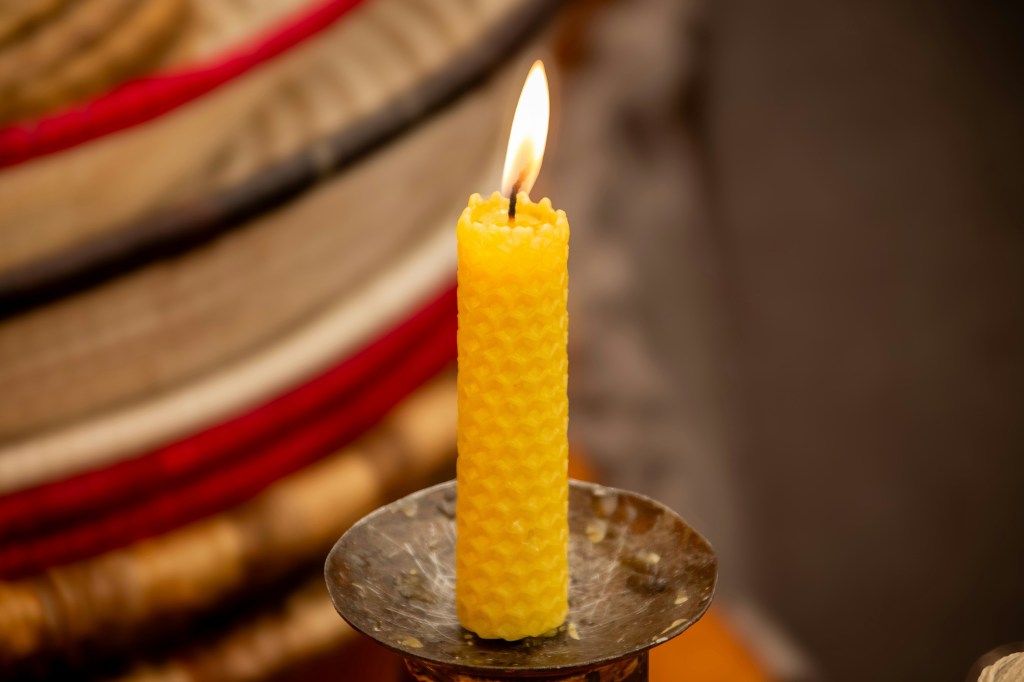
The same gathering and closing can be used all year. This helps with the daily rhythm which creates repetition and predictability for children. Alternatively, you can change them with the seasons, which has its own benefits of staying fresh and signaling the changes throughout the year. Some teachers like to start circle time by lighting a candle to set the intention of being present and they blow out the candle at the end.
Stories
In Waldorf, stories are memorized by the teacher and told aloud to the class with no books or pictures. This is to help foster imagination in the children. I personally love to read books with my son and he loves them too. I’m debating whether I want to do a combination of oral and physical stories with him or just stick to physical stories. As of now, we’re just sticking with our physical stories.
Waldorf circle time at home
I plan to homeschool my 2 1/2 year old for at least elementary school and I’m very interested in Waldorf principles. I’m always looking at ways we can incorporate its rhythm and whimsical nature into our day to day. This is why I did so much research into the verses and finger plays used in Waldorf and came across circle time. I wanted to find a way to use it at home with my son.
Some of the traditional Waldorf verses can be on the longer side and are catered towards children in preschool and older. Preschool aged children will also start to be able to repeat verses, but before 3, the important part is for the child to listen to the verses and do the fingerplay. Since my toddler is 2 1/2, I created nature inspired verses similar to those used in Waldorf education that are shorter for his attention span. They also use simpler, more modern terms than some Waldorf verses. Being exposed to the process of circle time, hearing verses, and doing finger play has benefits in itself regardless of where the verses are from! If you’d like to see the simplified versions, let me know in a comment below and I can make a separate post about them.
I focused on being engaging, easy to understand, simple to remember, and focused on movement for the finger play. I’m not doing a full on circle time but I’m inspired by it and use different aspects of it in our day to day. I am not rigidly following any plan or schedule, especially at such a young age, and plan on adapting how I do circle time as he grows older!




 The Waldessori Mom
Leave a comment